> For the complete documentation index, see [llms.txt](https://wiki.lucysecurity.com/llms.txt). Markdown versions of documentation pages are available by appending `.md` to page URLs; this page is available as [Markdown](https://wiki.lucysecurity.com/guides/awareness-training/awareness-only-campaigns/using-awareness-groups.md).
# Using Awareness Groups
## Use Cases
* You want to send specific training content based on the recipient's department, skill level, or other natural grouping, and these recipients are already grouped accordingly (e.g. a recipient group for each department has already been created).
* You want to send specific training content to each recipient based on their [risk level](/application-reference/campaigns/campaign-settings/main-settings/awareness-education.md#awareness-template-base-settings), and these recipients are all in the same group.
***
## Using Awareness Groups
In this method we will add multiple recipient groups to a campaign and send them all different trainings by binding each recipient group to an awareness group.
### Add Trainings
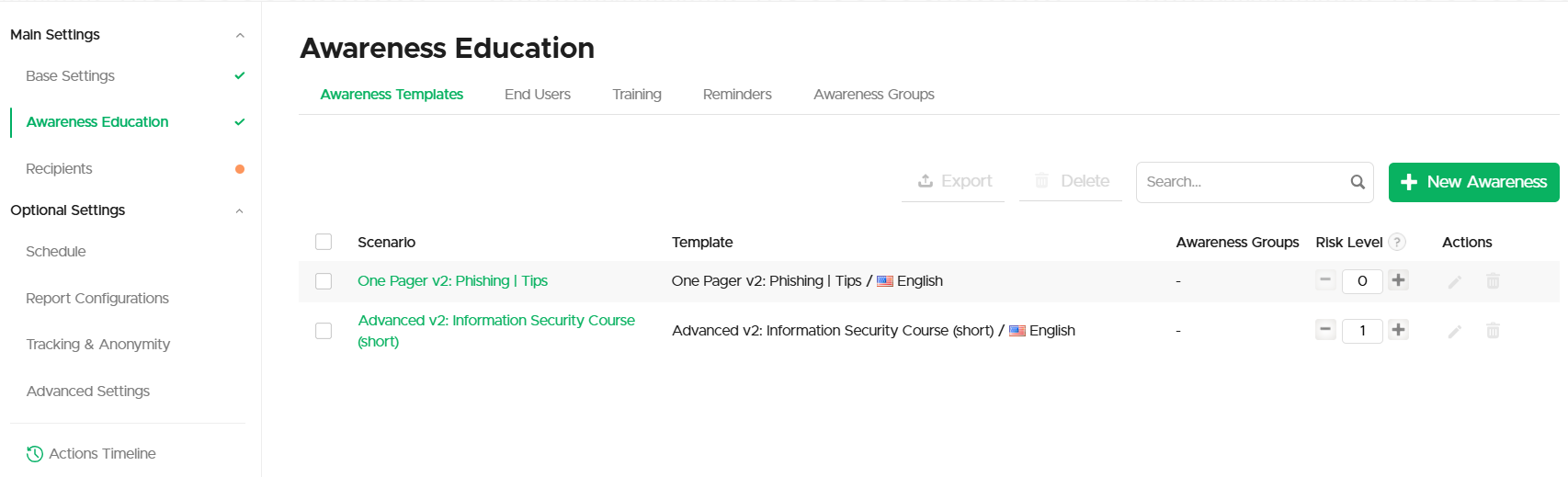
Add each awareness training to the campaign:
### Create Awareness Groups
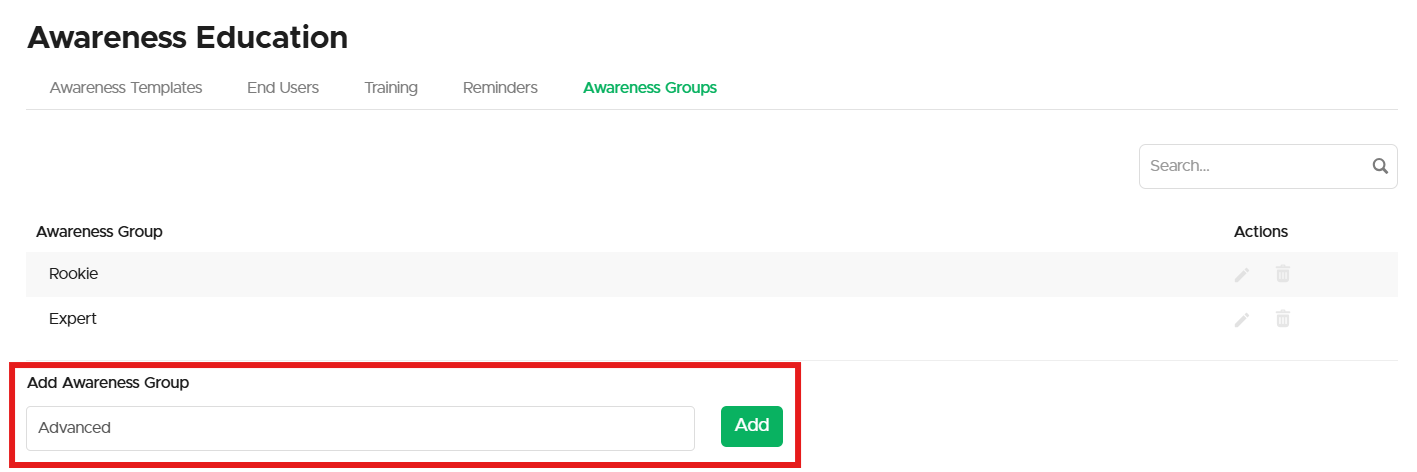
Select **Awareness Groups** and create a group for each Awareness training:
To create a new Awareness Group type the name into the text box at the bottom and select **Add**.
{% hint style="info" %}
By default, one group already exists named after the first awareness added to the campaign.\
You can rename this group.
Every Awareness campaign requires at least one Awareness group.
{% endhint %}
### Assign Awareness Groups
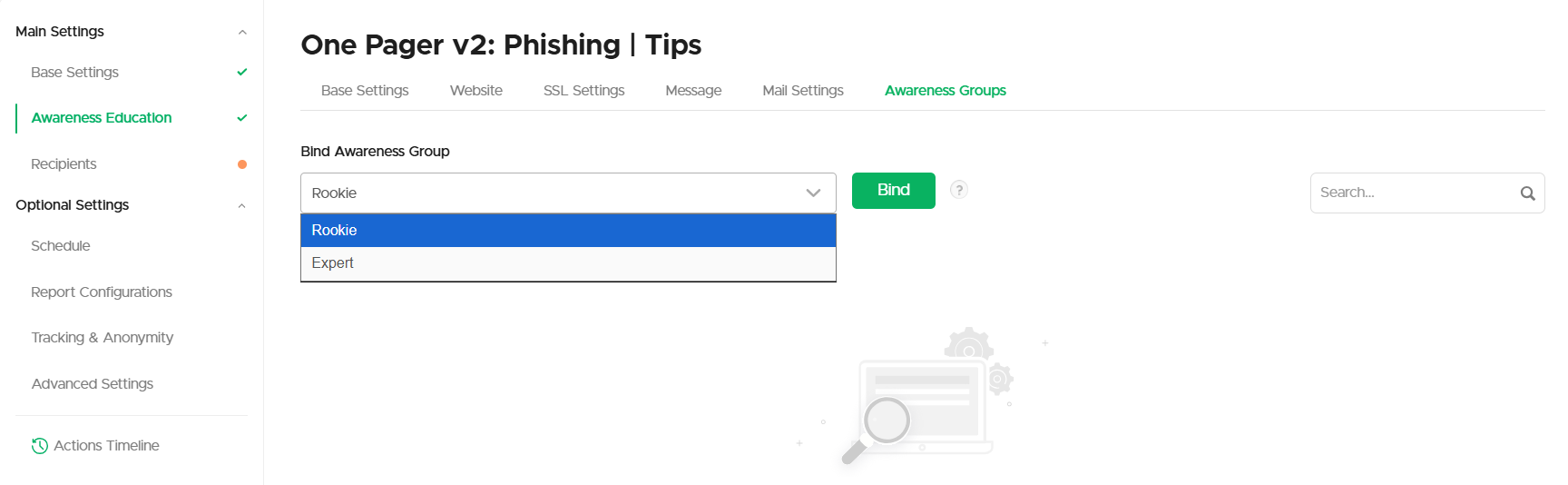
To assign an Awareness Group, select one of the Awareness scenarios and go to the **Awareness Groups** tab:
{% hint style="success" %}
To assign an awareness group select it from the menu and click **Bind**.
{% endhint %}
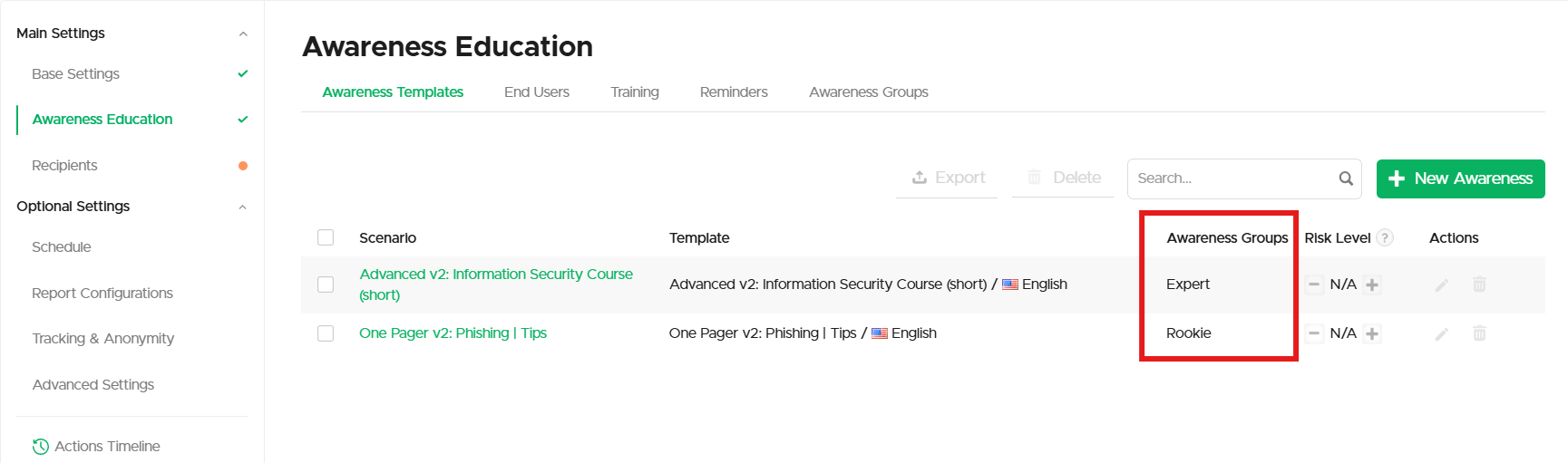
Repeat this step for every Awareness scenario until each one is bound to a different group:
### Add Recipients
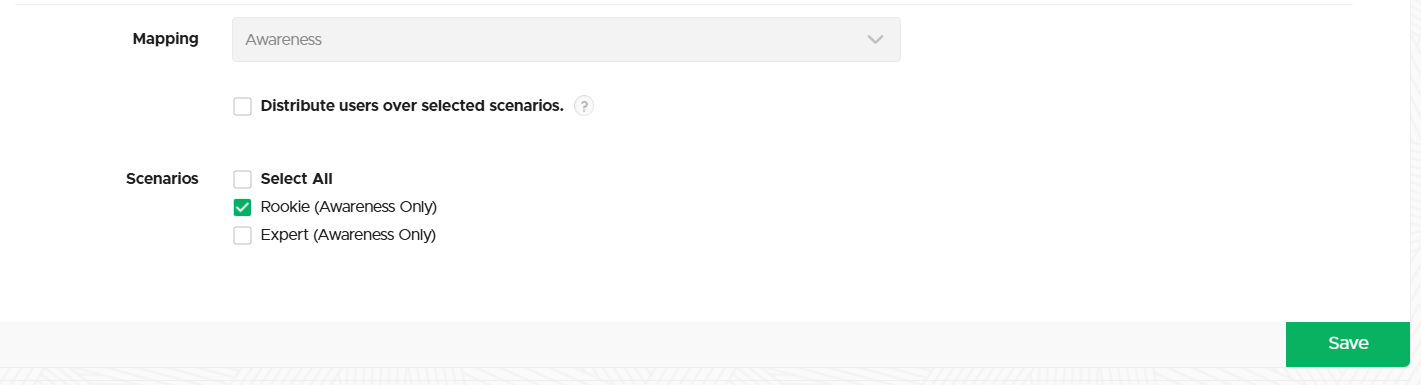
Go the **Recipients** page and select **Add Group**. Select your recipients and at the bottom of the page select an awareness group to bind it to those recipients:
Select **Save** to continue, and repeat this step for each awareness group.
{% hint style="info" %}
You can use the same group multiple times and bind recipients to multiple awareness groups. If a recipient is bound to multiple awareness groups they will receive each training bound to them.
{% endhint %}
***
## Using Risk Levels
In this method we will add one recipient group to a campaign and send the users in that group different trainings depending on their [reputation level](/application-reference/users/risk-score.md) (also called risk score or risk level).
### Add Trainings
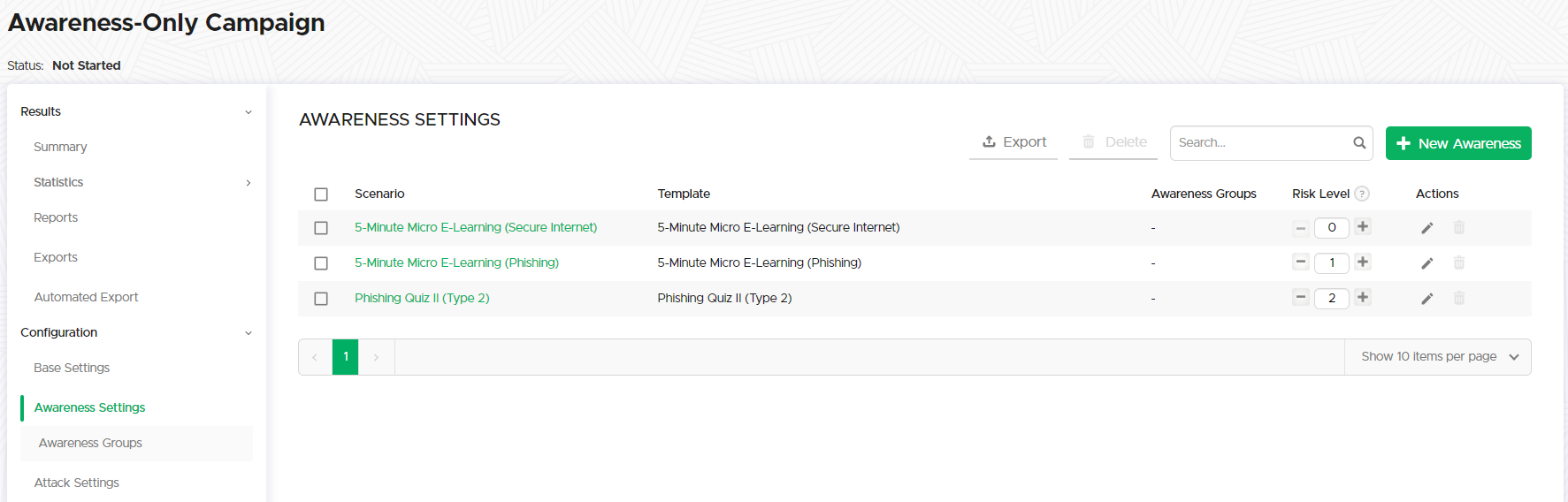
Add each awareness training to the campaign:
{% hint style="info" %}
Note the auto-incrementing **Risk Level** for each training.\
You can adjust these levels by using the `+` and `-` buttons.
{% endhint %}
{% hint style="warning" %}
Trainings may not have the same Risk Level.
{% endhint %}
#### Rename the Awareness Group
By default, the lone awareness group is named after the first training that was added. For clarity's sake you should rename the group to something like "Default" or another descriptive name. Whatever you name the Awareness Group, just make sure you have only one - we will use this group in the next step when we add recipients.
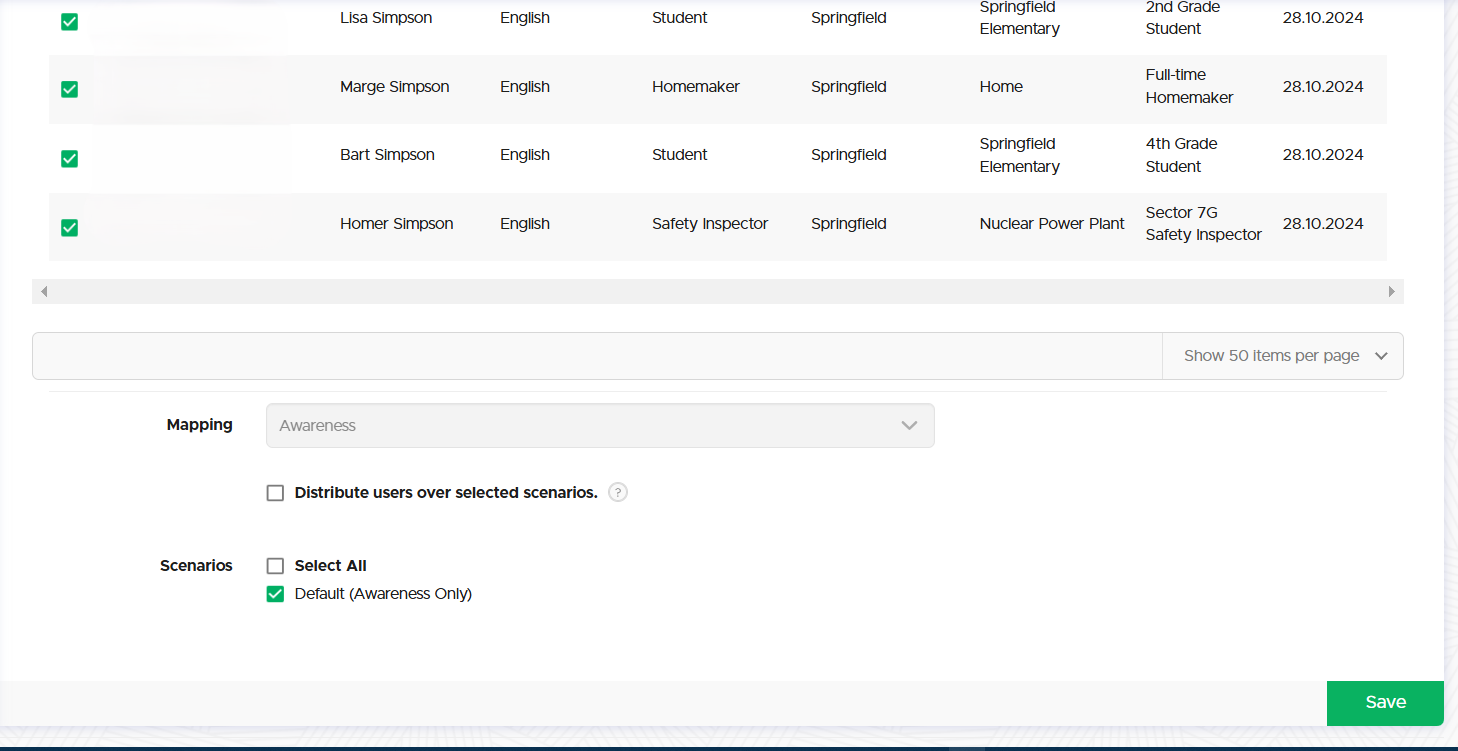
### Add Recipients
Add all of your recipients and select the lone awareness group under **Scenarios**.
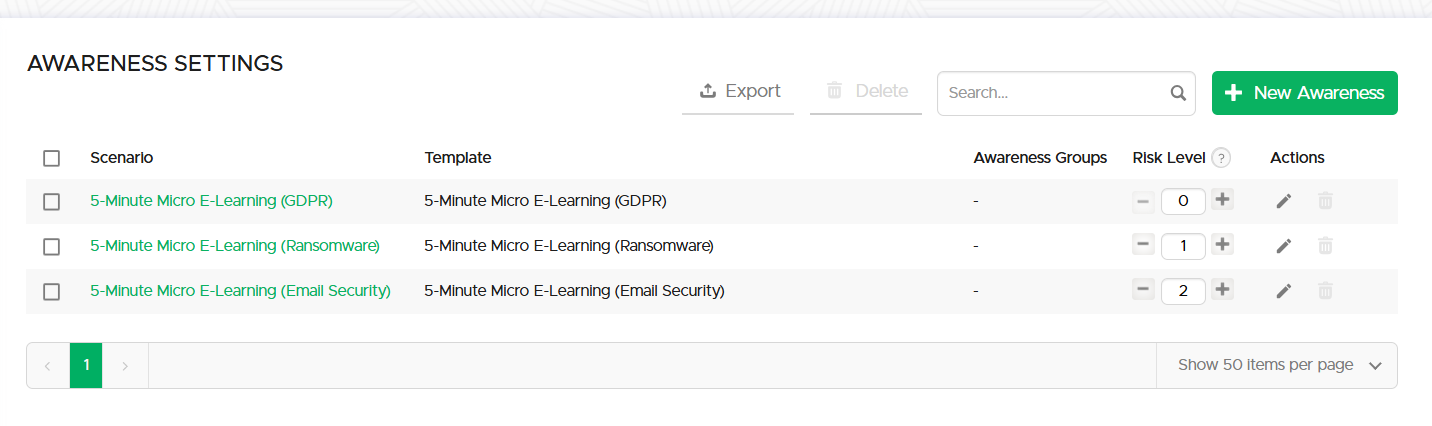
Once complete, your awareness settings should look like this:
---
# Agent Instructions
This documentation is published with GitBook. GitBook is the documentation platform designed so that both humans and AI agents can read, navigate, and reason over technical content effectively. Learn more at gitbook.com.
## Querying This Documentation
If you need additional information that is not directly available in this page, you can query the documentation by asking a question.
Perform an HTTP GET request on the following URL with the `ask` and `goal` query parameters:
```
GET https://wiki.lucysecurity.com/guides/awareness-training/awareness-only-campaigns/using-awareness-groups.md?ask=&goal=
```
`ask` is the immediate question: it should be specific, self-contained, and written in natural language.
`goal` is what the user is ultimately trying to achieve, the reason they need the answer. Sharing it helps GitBook give you a better, more relevant answer. A goal is most helpful when it describes the outcome the user wants rather than restating the question. For example, with `ask=how do I create an API token`, a goal like `automate deployments from our CI pipeline` lets GitBook tailor the answer to that use case.
The response will contain a direct answer to the question and relevant excerpts and sources from the documentation.
Use this mechanism when the answer is not explicitly present in the current page, you need clarification or additional context, or you want to retrieve related documentation sections.