> For the complete documentation index, see [llms.txt](https://wiki.lucysecurity.com/llms.txt). Markdown versions of documentation pages are available by appending `.md` to page URLs; this page is available as [Markdown](https://wiki.lucysecurity.com/application-reference/settings/backup-and-restore/backup-settings.md).
# Backup Settings
### Introduction
Administrators can configure regular, automatic backups of their workstation. These backups are stored locally and help to preserve snapshots of your installation.
***
### Configuration
{% hint style="info" %}
Navigate to **Settings -> Backup Settings**
{% endhint %}
{% tabs %}
{% tab title="Backup Target" %}
You can choose which parts of the system you want to back up.\
If you don't want to back up anything, click "Deselect All".
* **Database**: Backs up the entire Lucy database by creating an SQL dump.
* **Files**: Saves a copy of the folder "/opt/phishing/files", which includes data for campaigns, templates, and more. It's usually good to back this up along with the Database.
* **Emails**: Creates a backup of the Mail Manager's settings and all its folders.
* **Config**: Saves copies of Lucy’s configuration files for web and mail servers, among others.
* **Code**: Backs up Lucy's source code and executable files.
{% endtab %}
{% tab title="Backup Frequency" %}
Configure how often the backup job runs:
Note that creating backups more frequently will consume more storage on your workstation.
See the "Backup Days" tab for examples of how to use each setting.
{% endtab %}
{% tab title="Backup Time" %}
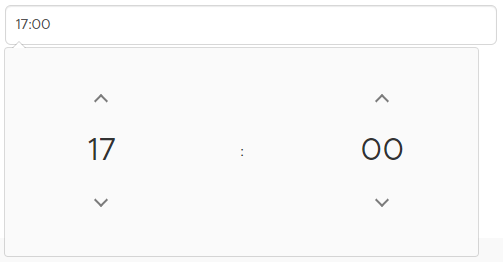
The backup job will run at the specified time. The job can take some time and consumes resources on your server while it is running (RAM and CPU), so it's a good idea to schedule this at a time when you expect decreased activity on the server, such as overnight or on weekends.
{% endtab %}
{% tab title="Backup Days" %}
For Weekly, Monthly, and Yearly backups, you can choose specific days and months for scheduling. Use commas to separate values within the same category and semicolons to distinguish between months and days.
* **Weekly:** 1-7 for each day of the week. For example `1,3,5` will create backups every Sunday, Tuesday, and Thursday.
* **Monthly:** 1-31 for days. For example, `1,15` will create backups on the 1st and 15th of every month.
* **Yearly:** 1-12 for months, 1-31 for days. For example, `1,3,5,7;1,15` will create backups on the 1st and 15th of January, March, May, and July.
{% endtab %}
{% endtabs %}
{% hint style="info" %}
**Notify About Errors**
When this setting is enabled, the [notification email](/application-reference/settings/advanced-system-settings/advanced-settings.md#system-notification-email) defined in the **Advanced System Settings** will send an email to your Lucy admins if the backup operation encounters an error.
{% endhint %}
### Automated backups location
Backup files are stored locally on your workstation, in the `/opt/phishing/files/db-backups` directory.
---
# Agent Instructions
This documentation is published with GitBook. GitBook is the documentation platform designed so that both humans and AI agents can read, navigate, and reason over technical content effectively. Learn more at gitbook.com.
## Querying This Documentation
If you need additional information that is not directly available in this page, you can query the documentation by asking a question.
Perform an HTTP GET request on the following URL with the `ask` and `goal` query parameters:
```
GET https://wiki.lucysecurity.com/application-reference/settings/backup-and-restore/backup-settings.md?ask=&goal=
```
`ask` is the immediate question: it should be specific, self-contained, and written in natural language.
`goal` is what the user is ultimately trying to achieve, the reason they need the answer. Sharing it helps GitBook give you a better, more relevant answer. A goal is most helpful when it describes the outcome the user wants rather than restating the question. For example, with `ask=how do I create an API token`, a goal like `automate deployments from our CI pipeline` lets GitBook tailor the answer to that use case.
The response will contain a direct answer to the question and relevant excerpts and sources from the documentation.
Use this mechanism when the answer is not explicitly present in the current page, you need clarification or additional context, or you want to retrieve related documentation sections.